This is how we’ll remember
That like mycelia, like the soil, like interconnected forests and seas
We have always belonged to one another.
This is how we’ll find unexpected pathways.
This is how we’ll reconstitute the world.
‘Compost’ as a metaphor and a theoretical framework has been taken up by ecofeminists (Hamilton and Neimanis 2018), anti-colonial scholars (French et al 2020), critical posthumanists (Roura 2022), and queer artists and theorists (Pau et al 2024). In Jennifer Mae Hamilton and Astrida Neimanis’ thinking, composting is a citational practice that draws knowledge from ‘arrangement of correspondences’ and ‘quality ingredients’, allowing these ingredients agency in the process of decomposition (Hamilton and Neimanis 2018, 34-35). For Ester Toribio Roura compost ‘is a speculative tool of ecological thinking that explores ways of activating discussions of care, both between humans, and between humans and other-than-humans. It questions how humans relate with the other-than-human and the ecologies we all co-form’ (Roura 2022). This is also a core question of Vector magazine’s 2026 special issue on ‘Zoefuturism’.
Through these relations and ecologies of compost, might we also dream, create, and write an open, undefined future, as the special issue of Vector suggests? To find out, the co-directorate of the London Science Fiction Research Community proposed a creative-critical submission to the issue, in the form of a zine using the theme and method of ‘Compost Futures’. A zine was chosen specifically because it is a non-academic form of publishing. It was something all of the co-directors could contribute to, as able, with minimal administration and coordination. It was produced at a time when we all felt at capacity. We had recently collaborated on another zine, ‘Gas in the Tank’, which offered us a space to voice our collective tiredness, emptiness, and burnout, to reflect on the fumes that were keeping us going, or to express anger or frustration about our reliance on fossil fuels (literal or metaphorical) in the first place.
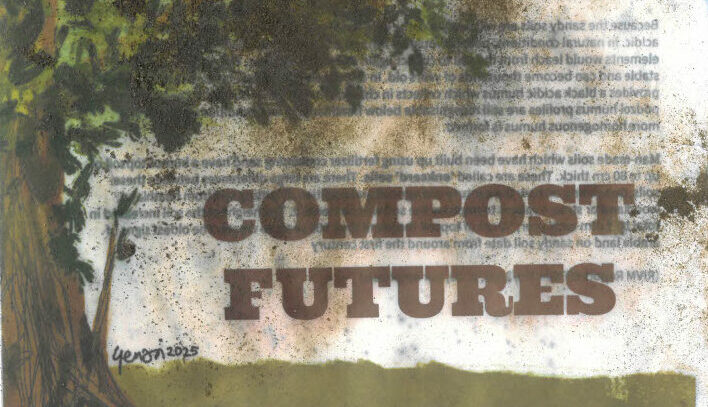
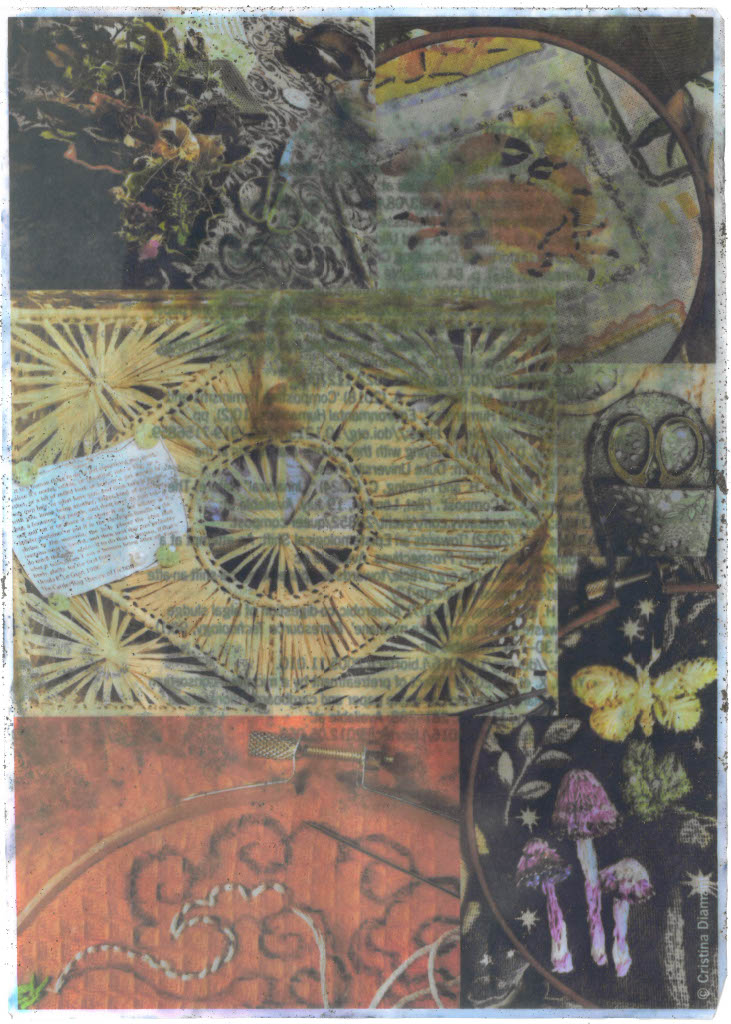
For ‘Compost Futures’ we saw another such opportunity to collect the disparate work we were doing in a flexible way. Contributors worked on their submissions separately (with the exception of Francis Gene-Rowe’s essay, which was then illustrated and annotated by Cristina Diamant) over a period of a few weeks. Megen de Bruin-Molé then compiled and formatted the zine. The original zine can be downloaded here. Yen Ooi’s artwork adorns the zine’s cover. In order to make space for more-than-human agency and collaboration in the production of our ‘Compost Futures’ submission, the collected zine was then printed and buried by Megen for 3 weeks (the amount of time needed for paper to begin to be decomposed by soil microbes; Yuan et al 2012). We did not know what would be left of the zine after this process, or if there would be anything left at all. Because the zine was buried in sandy soil along the Dutch river Waal, however, we did suspect that the process of metabolization might be slower than in other climates. Just as we might trust academic journal editors to take our words and help us communicate them to a particular audience, we trusted that whatever happened to the zine while it was in the soil would be somehow ‘productive’, even if we would not necessarily be able to understand how. Below is the end result, scanned at 300dpi on an A4 scanner at Winchester School of Art, UK:
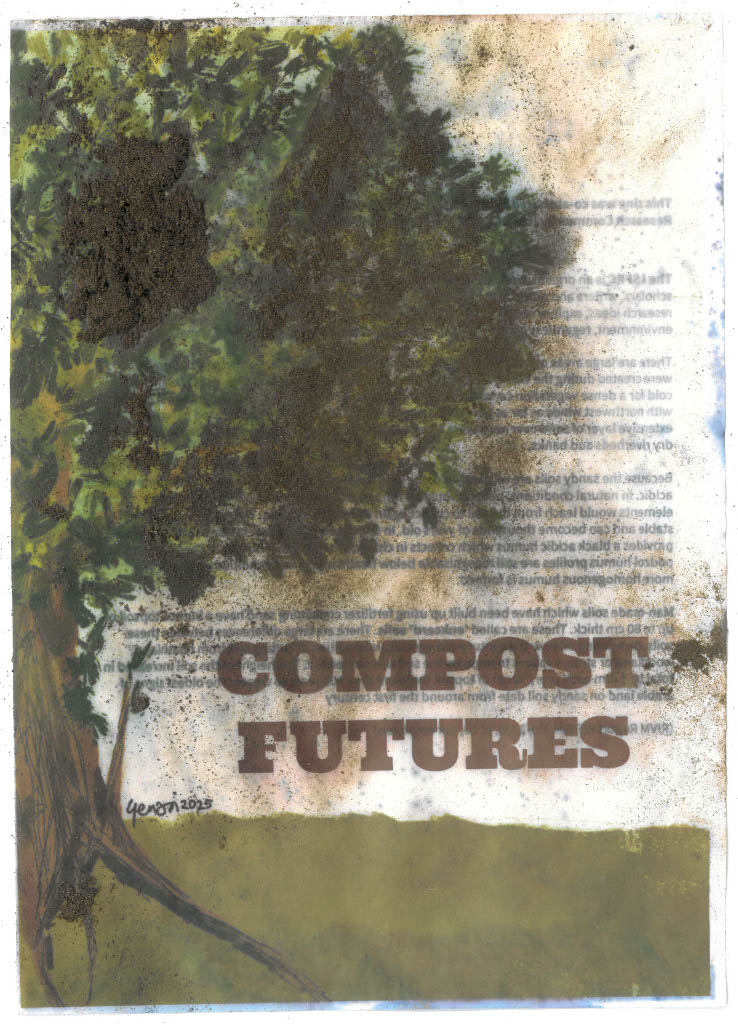
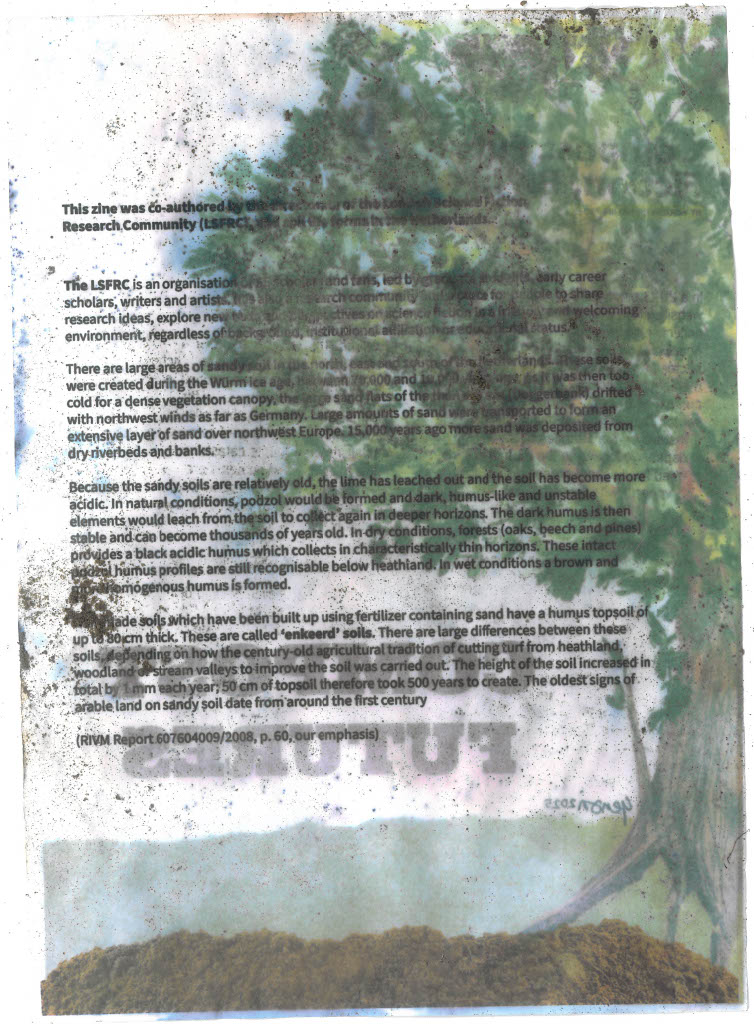
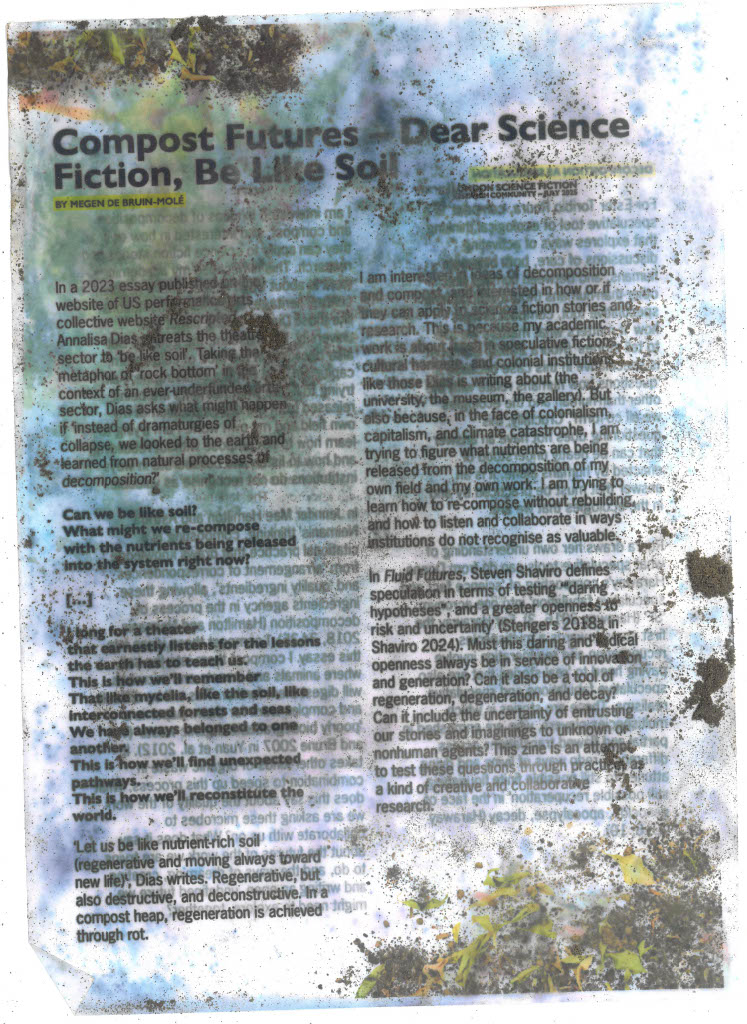
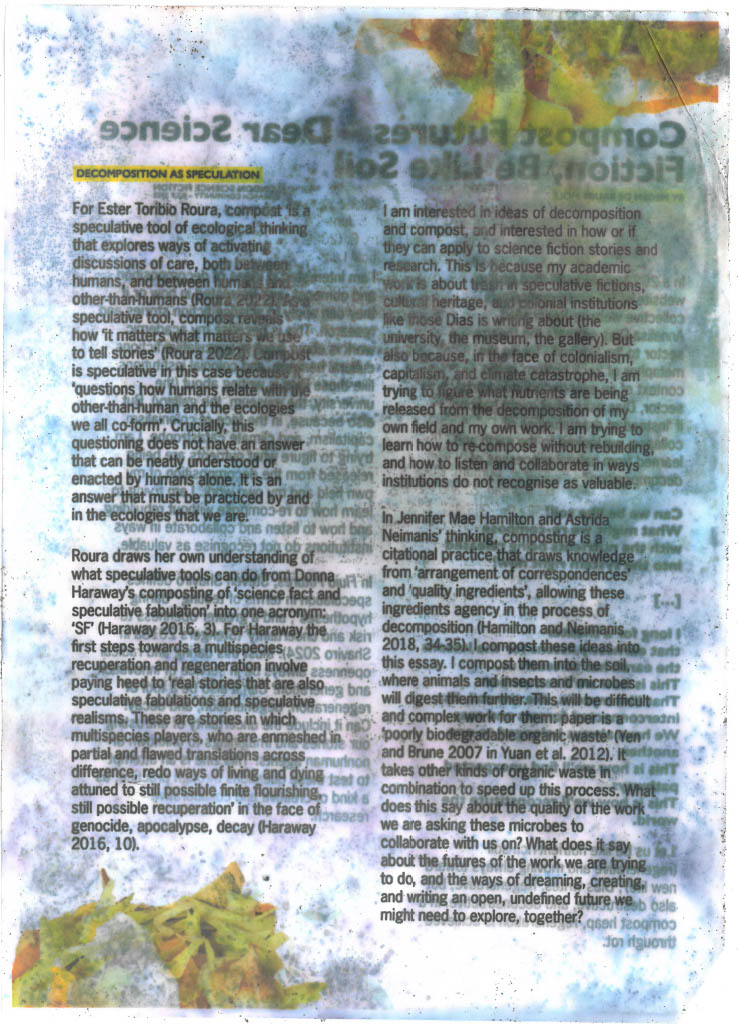
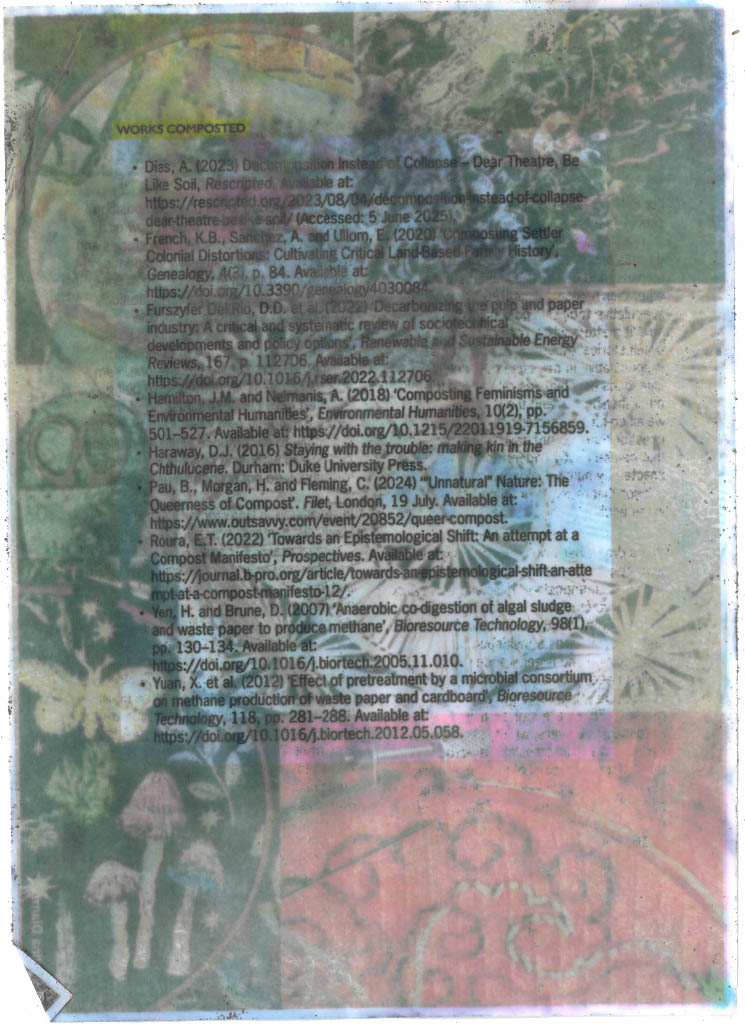
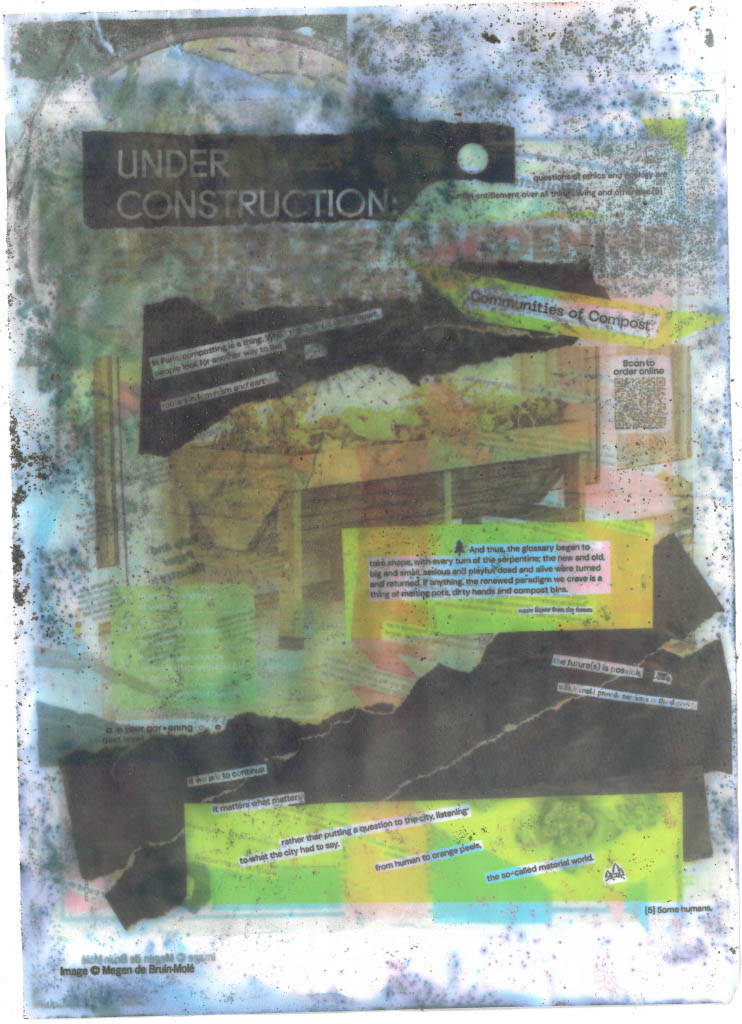
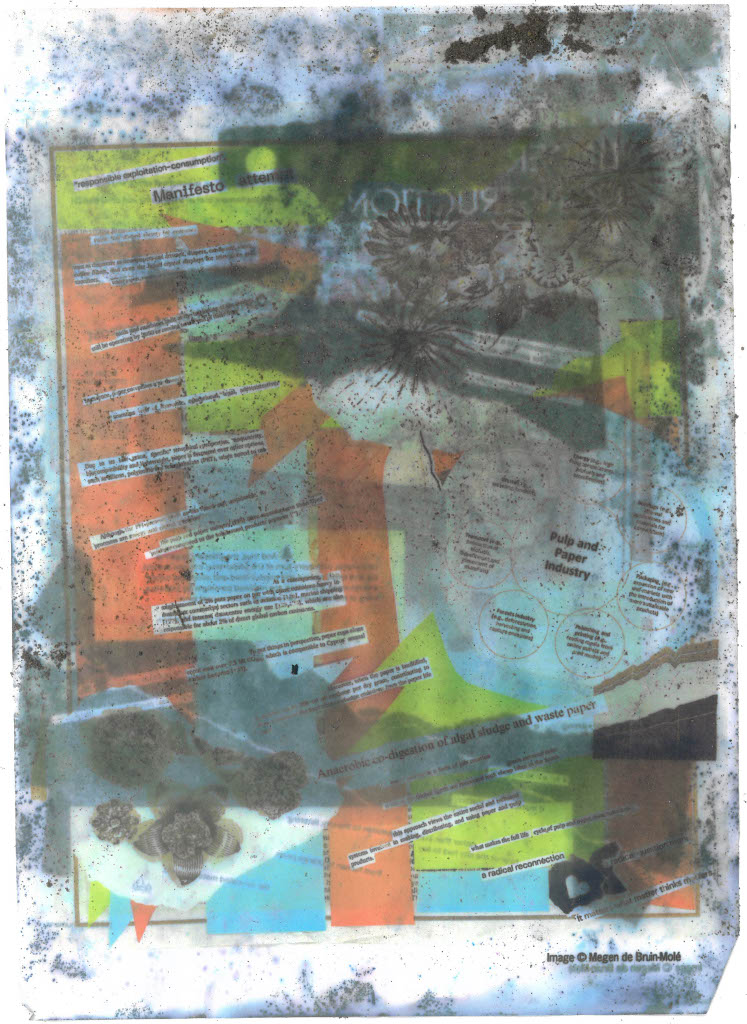
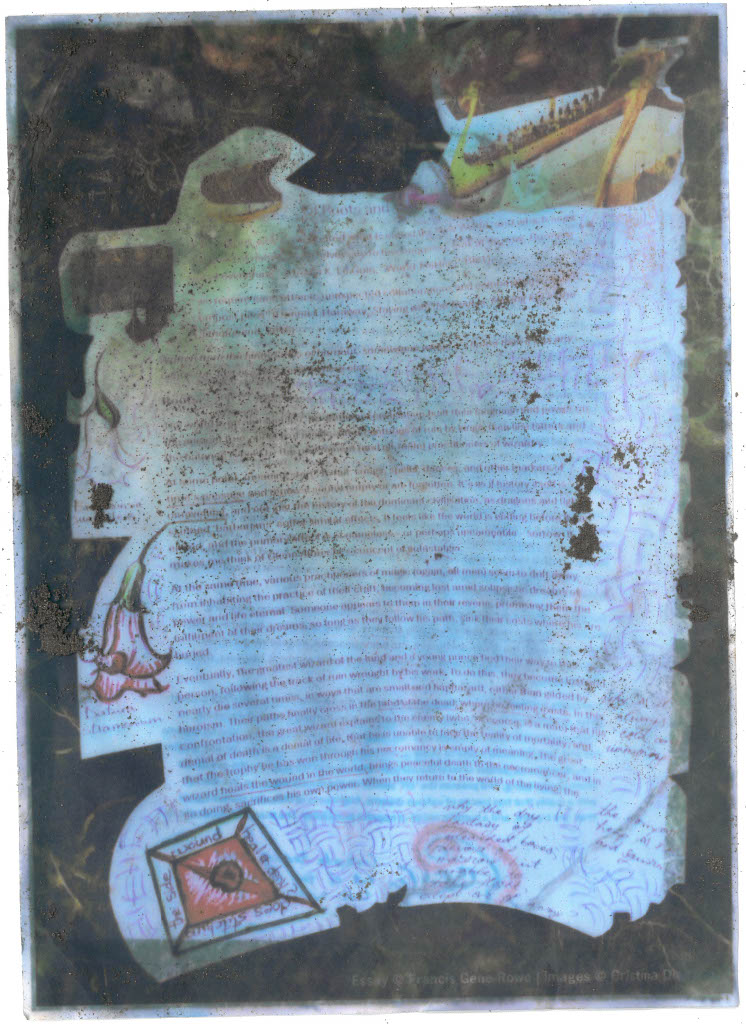
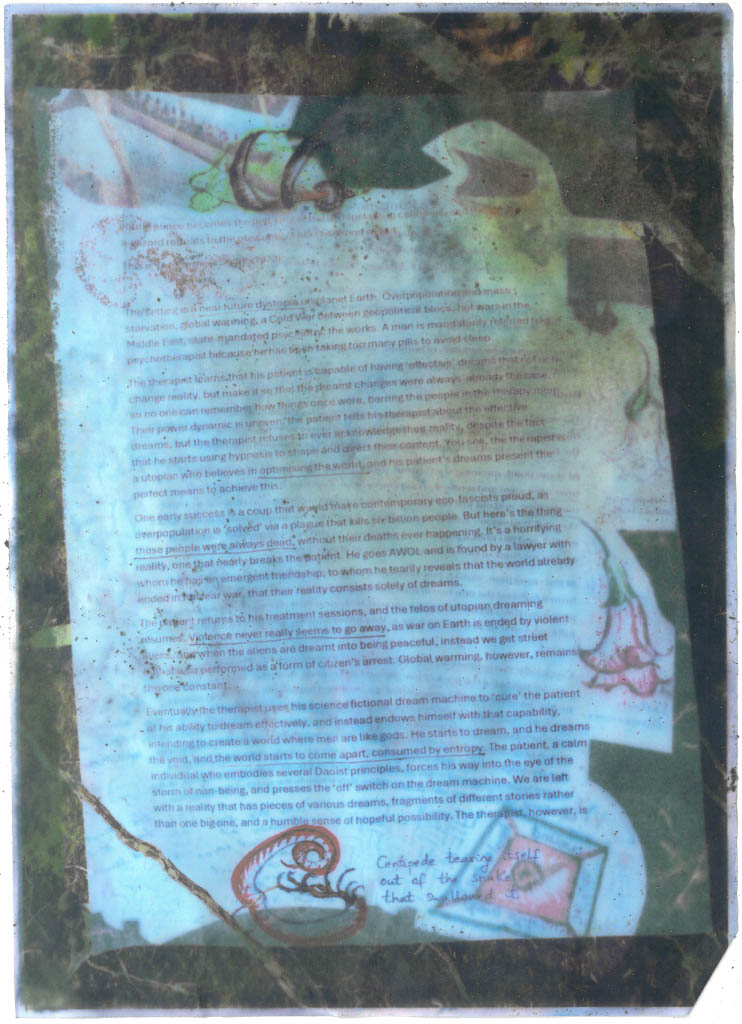
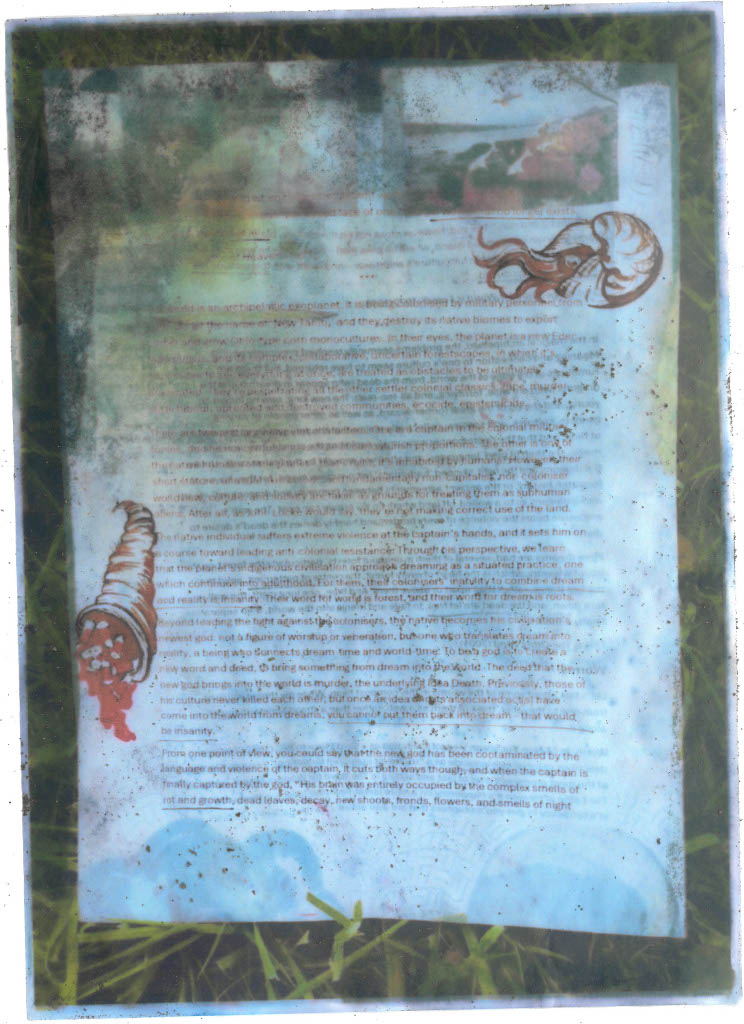
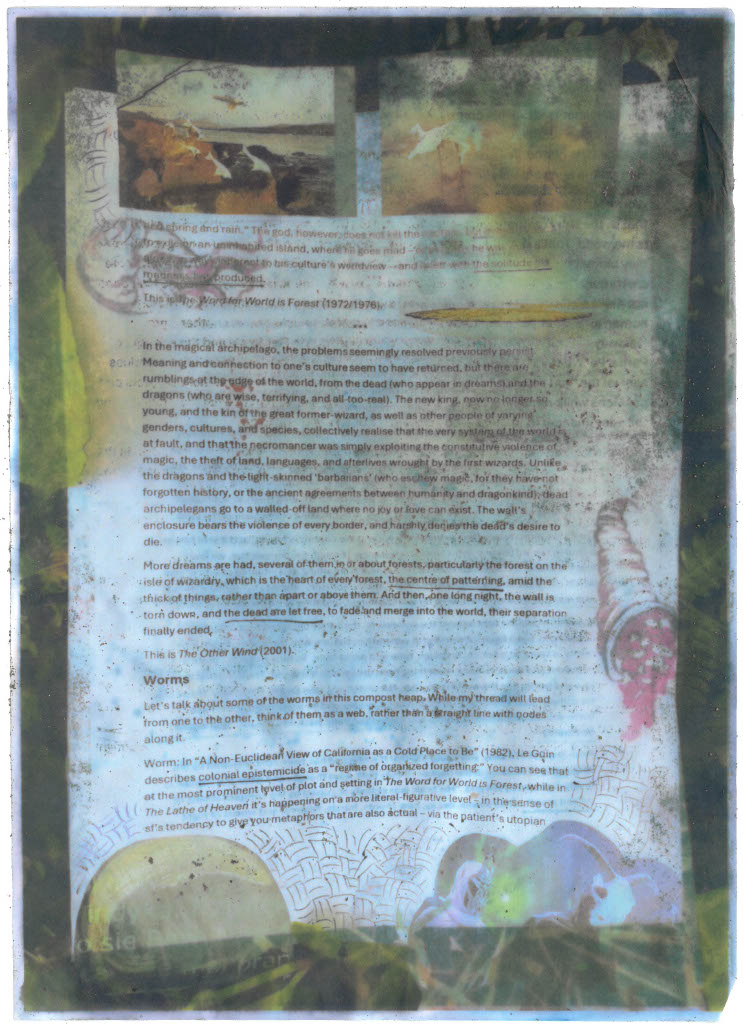
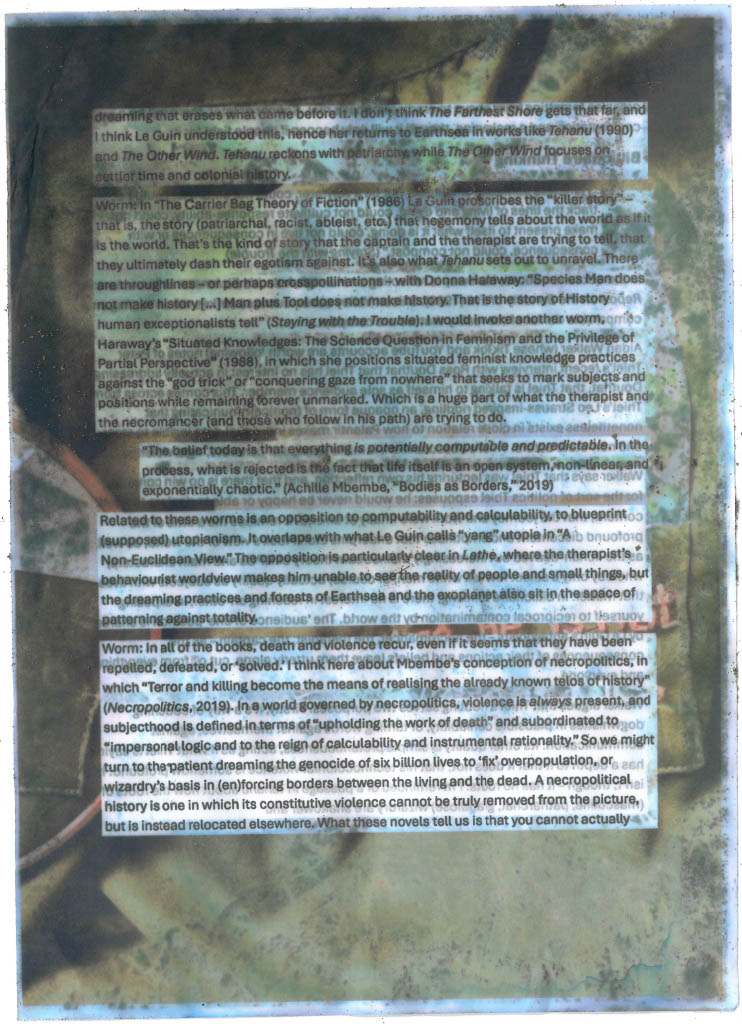
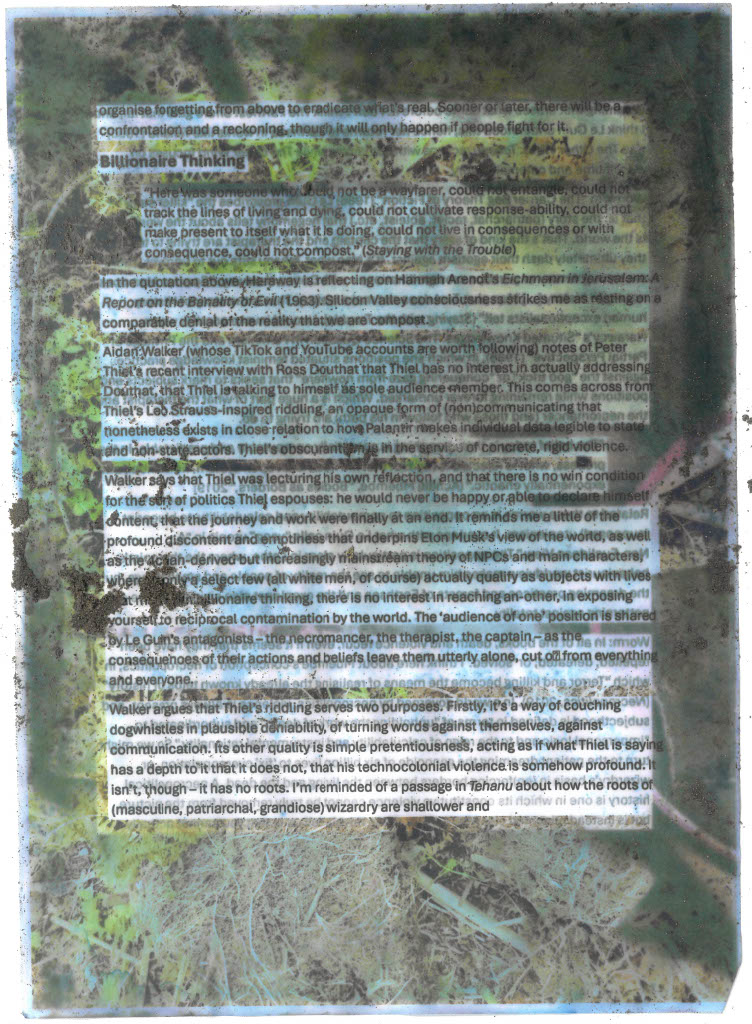
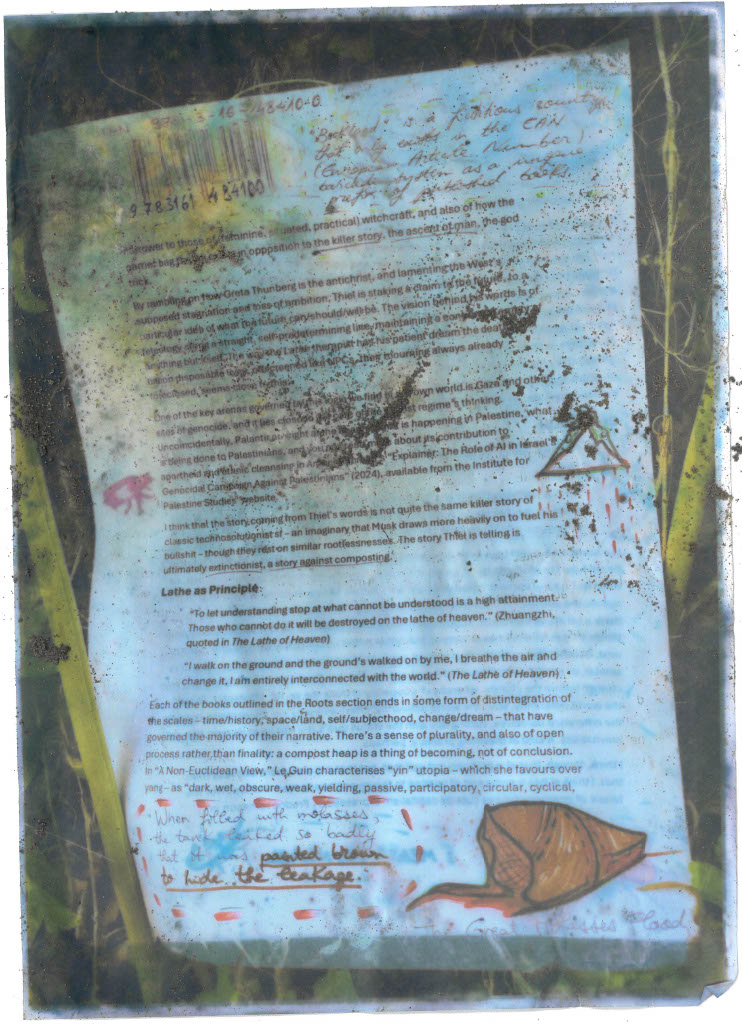
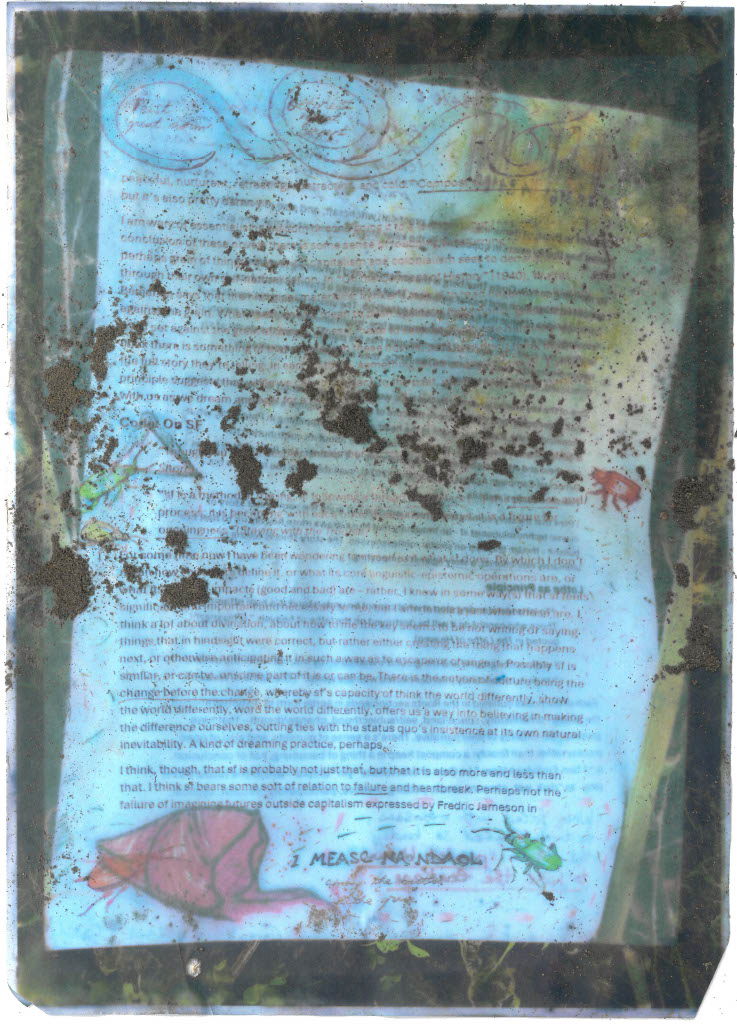
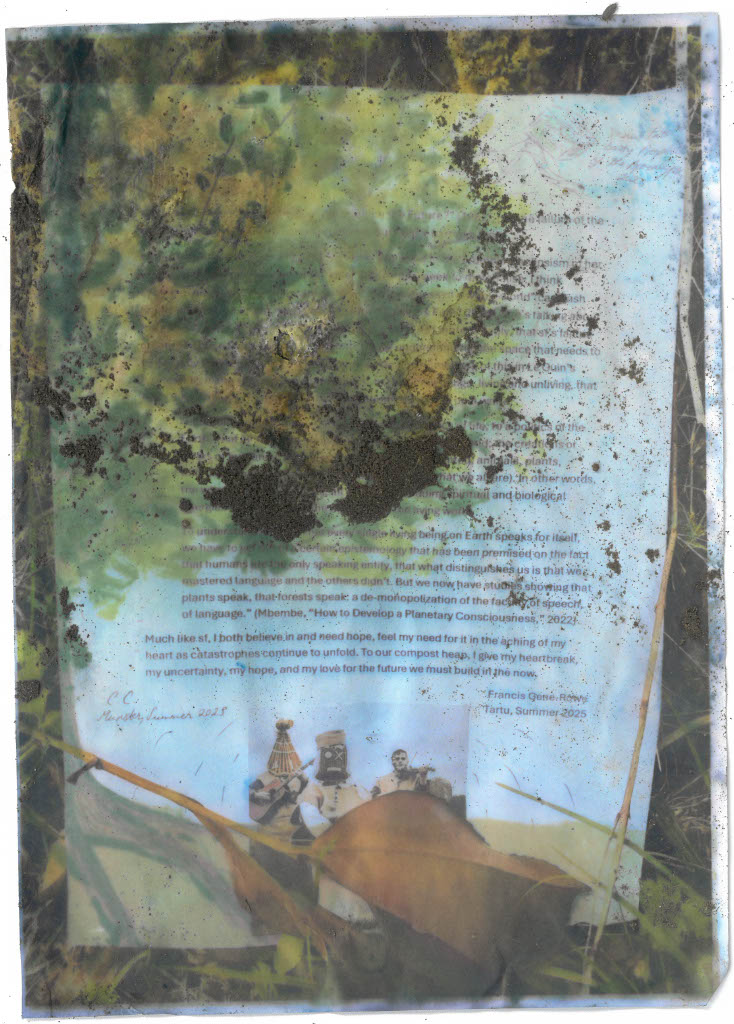
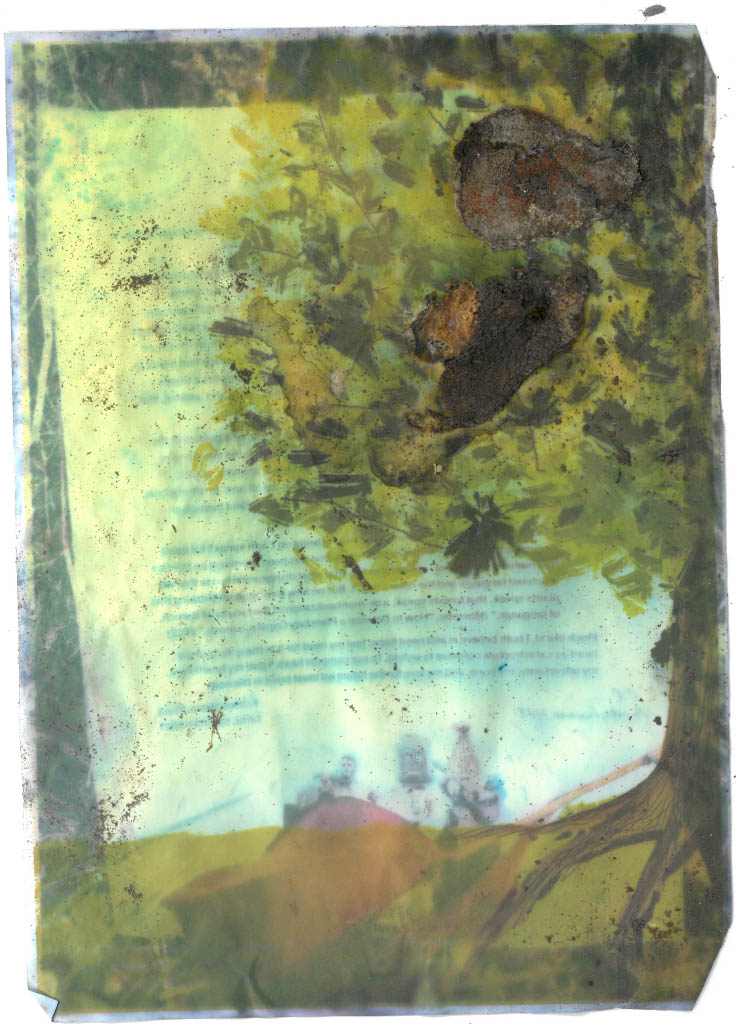
What future does this zine gesture towards? Is it one that invites further exchange between academics and soil microbes? Or is it one that artwashes the environmental harm done by paper waste? We hope it is not the latter—during the course of this project we discovered that despite paper’s reputation as an environmentally friendly alternative to plastic, both paper and paper waste still pose significant environmental problems. The production of paper creates large amounts of toxic waste, and despite being recyclable, paper accounts for over a quarter of landfill volume worldwide (Abushammala et al. 2023). The academic article from which we took our original estimate of paper decomposition rates was asking how we might reduce the methane produced by paper in landfill (Yuan et al 2012). The paper industry also generates nearly 2% of global greenhouse gas across its lifecycle (Furszyfer Del Rio et al. 2022, 1). Did the soil microbes and other life forms receive our zine as an invitation, as sustenance, or as yet another piece of exhausting paper waste?
There is no future alone, for either party. The topsoil in the Netherlands, where the zine was buried, is effectively human-made (Wesselink et al. 2006, 5). These ‘plaggen soils’ have developed over centuries in collaboration with humans, and with the manure and sod of human agriculture (Blume and Leinweber 2004, 37). Humans rely on the Earth, but that earth would be unrecognisable (and for some species, unlivable) if human intervention were undone. How can we better understand and care for each other, both as we are now and as we want to be? It is important too to place environmental impact into its own environmental context. 5.5% of global carbon emissions come from the world’s militaries, not counting the secondary impacts of war on the environment, including the pollution of the soil (Gordienko 2025). The struggles of nonhuman others are also our struggles.
Whatever future this zine foreshadows is also not presented to you in its entirety. While the bulk of the zine was on paper, Cristina Diamant also created a series of embroidered works to include in the final publication. These were adorned with amulets and excerpts from various science fiction texts, and enclosed in a wicker basket which was then also buried. Though initially dug up at the same time as the paper zine, the slower rate of decay of fabric meant no noticeable difference or ‘collaboration’ was visible. The basket was re-buried for a further three months while the process of review for the paper zine was underway. Unfortunately, sometime between this second burial and the intended excavation date, the basket disappeared. Whether this was due to flooding or flora or fauna (human or nonhuman) is hard to say: we only know that it was no longer where we had left it, and no trace of it remained.
Some images of this work can be found in the paper zine. Additional images and scans can be seen below:
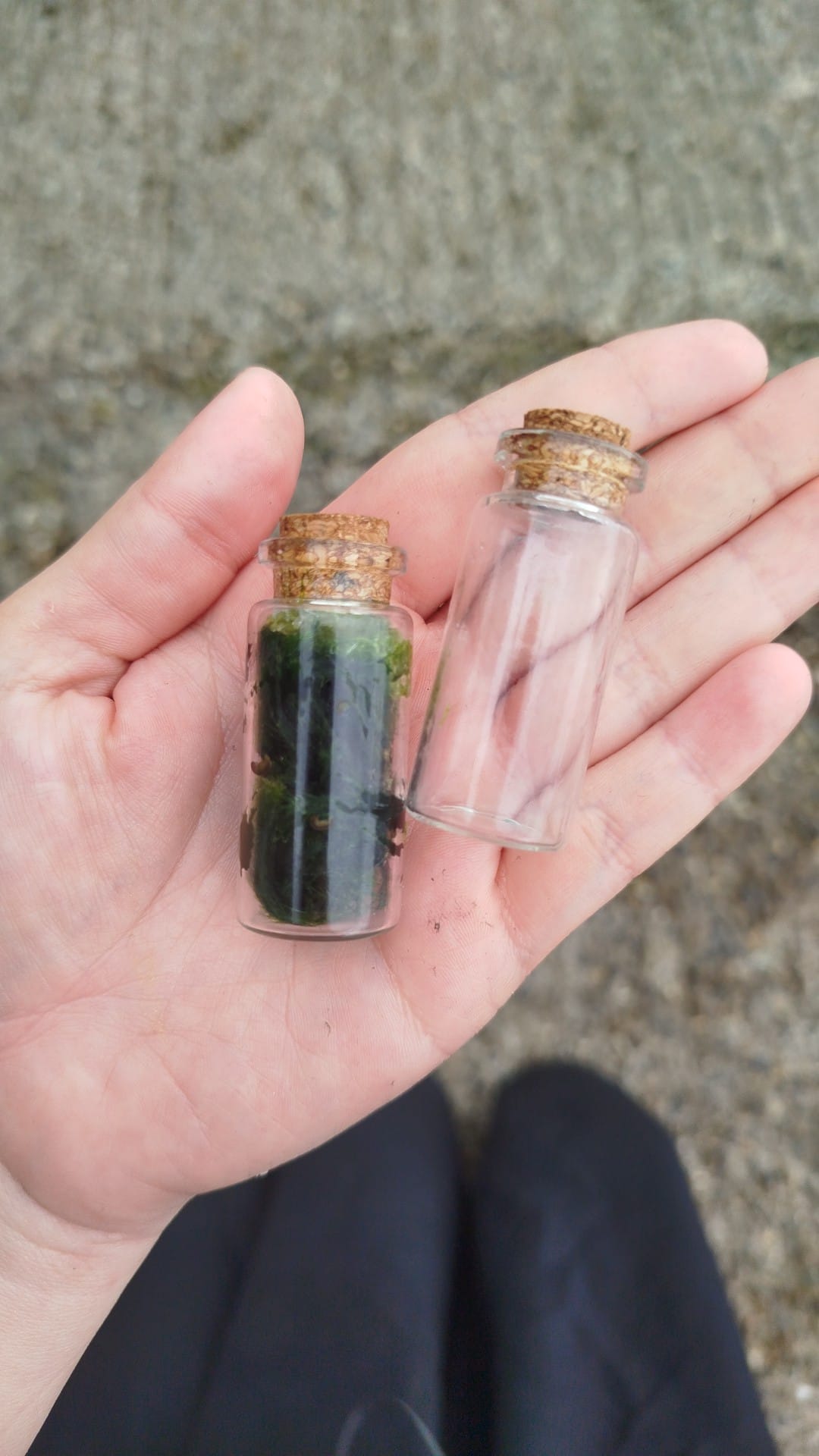
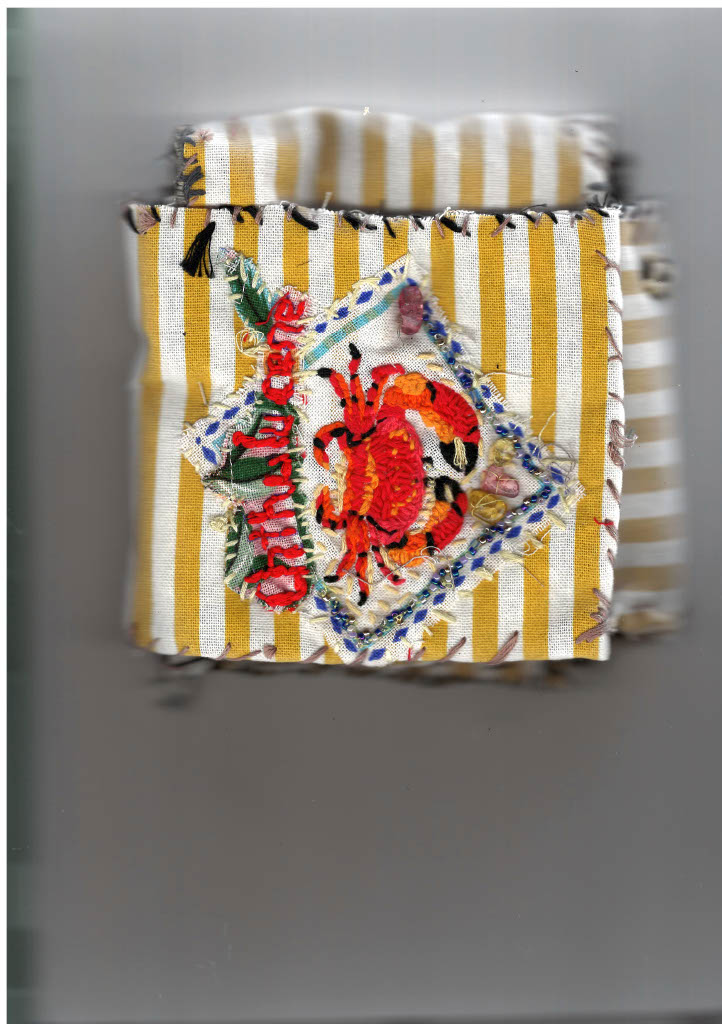
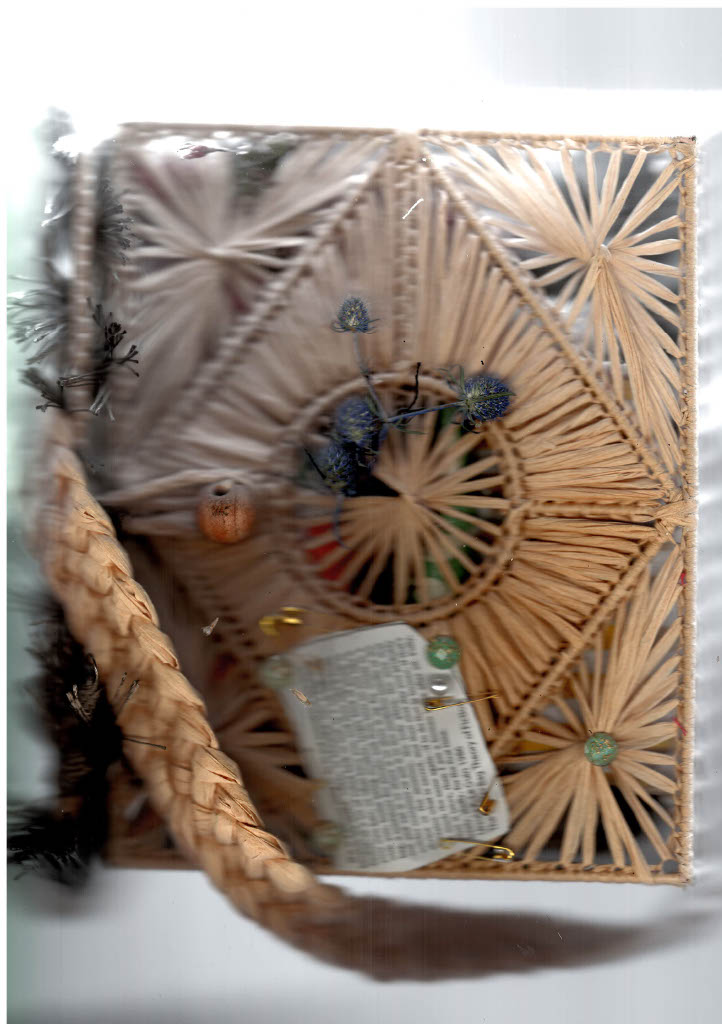
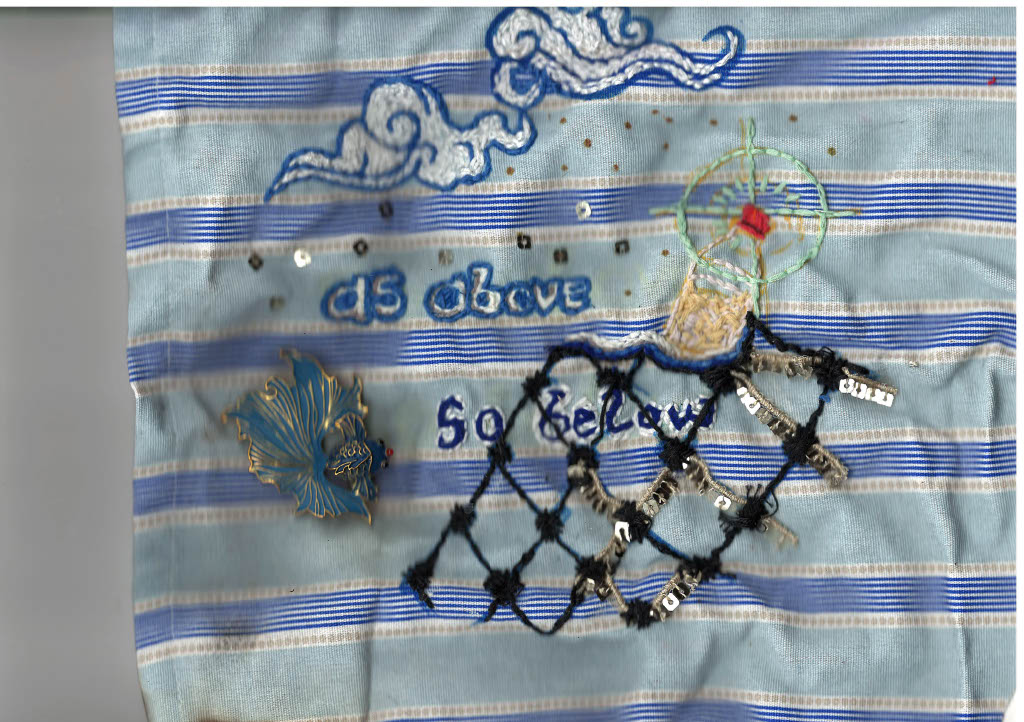
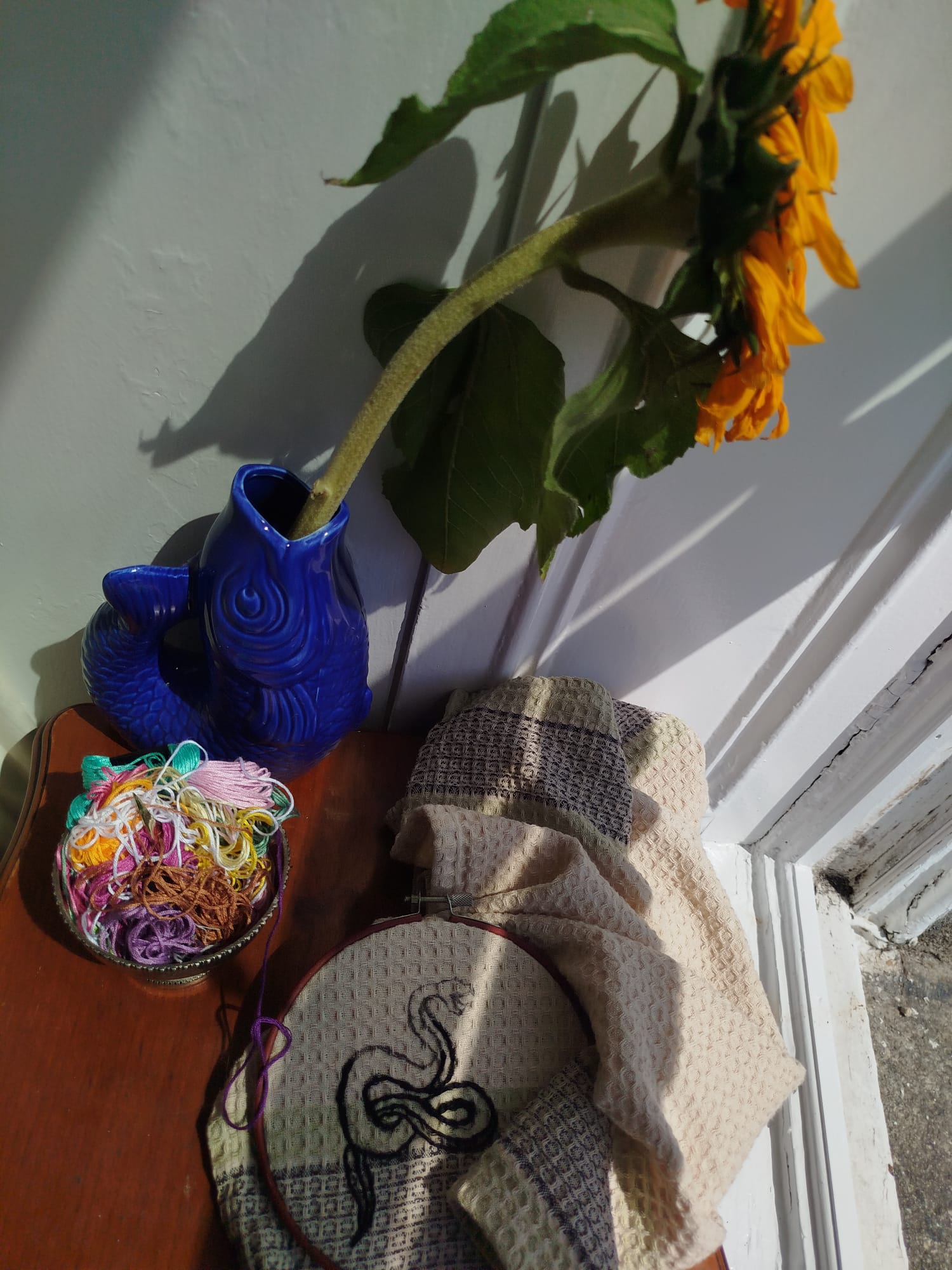
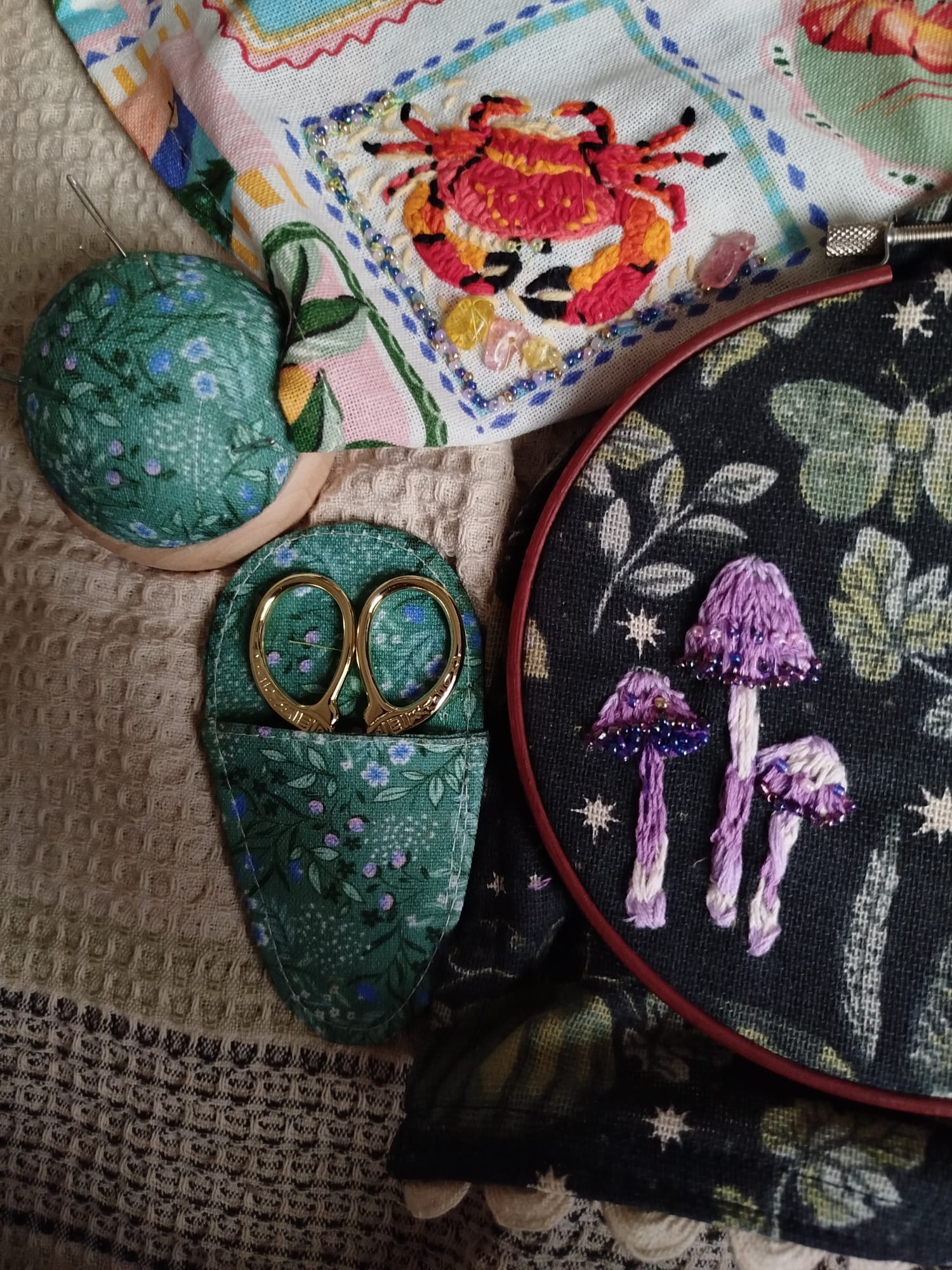
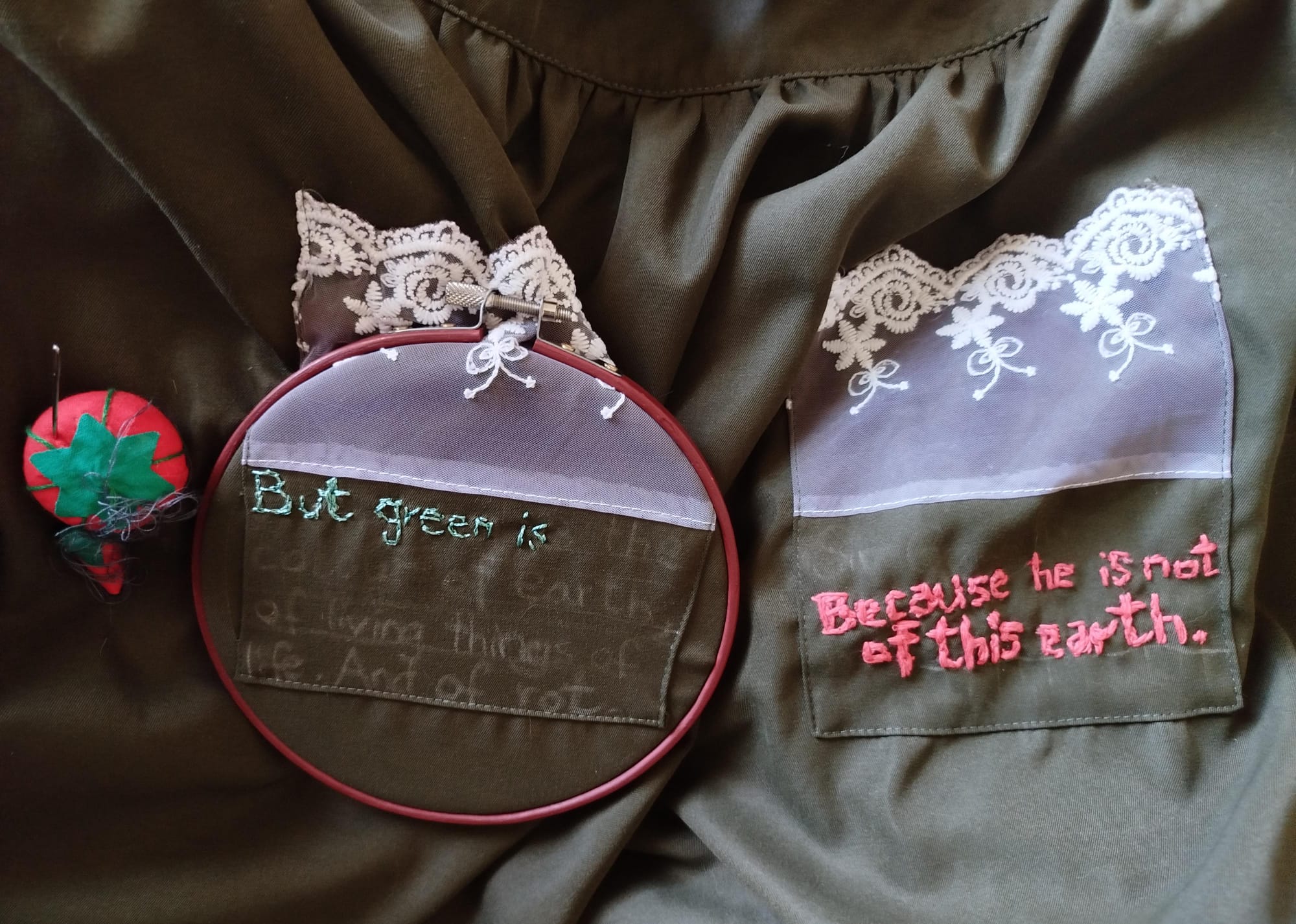
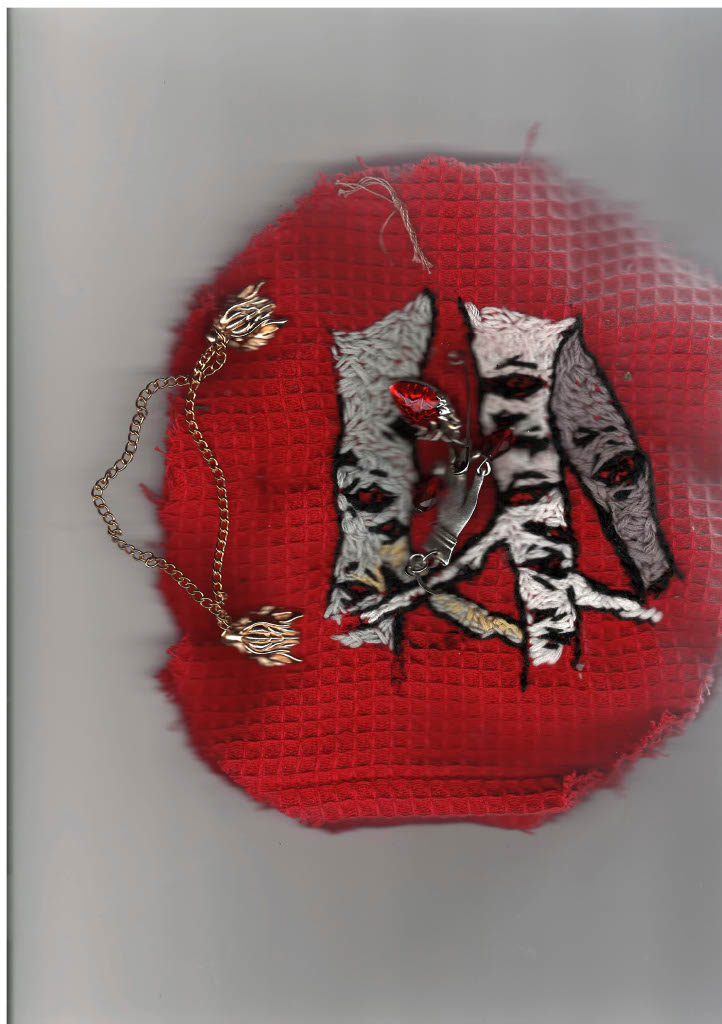
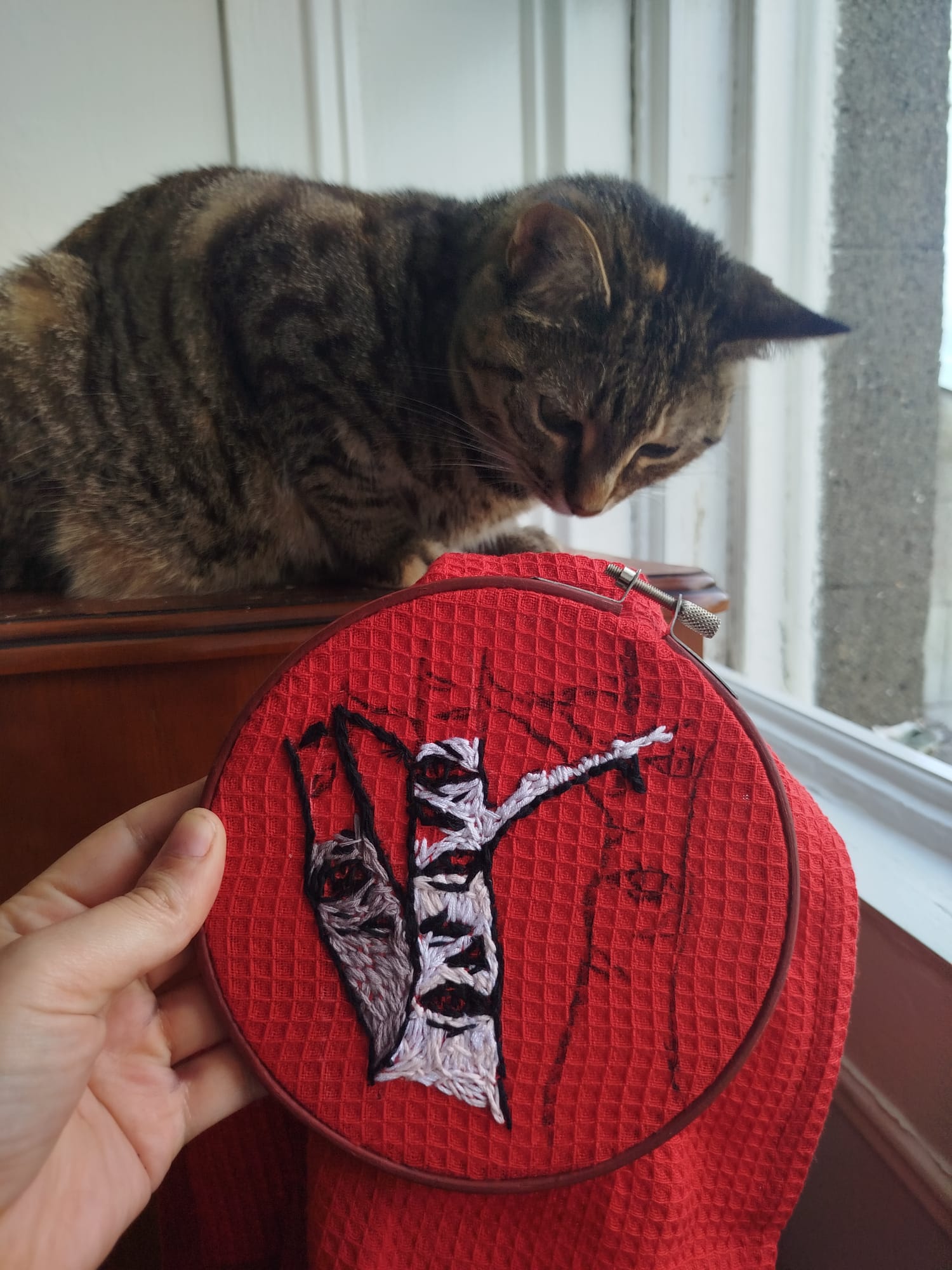
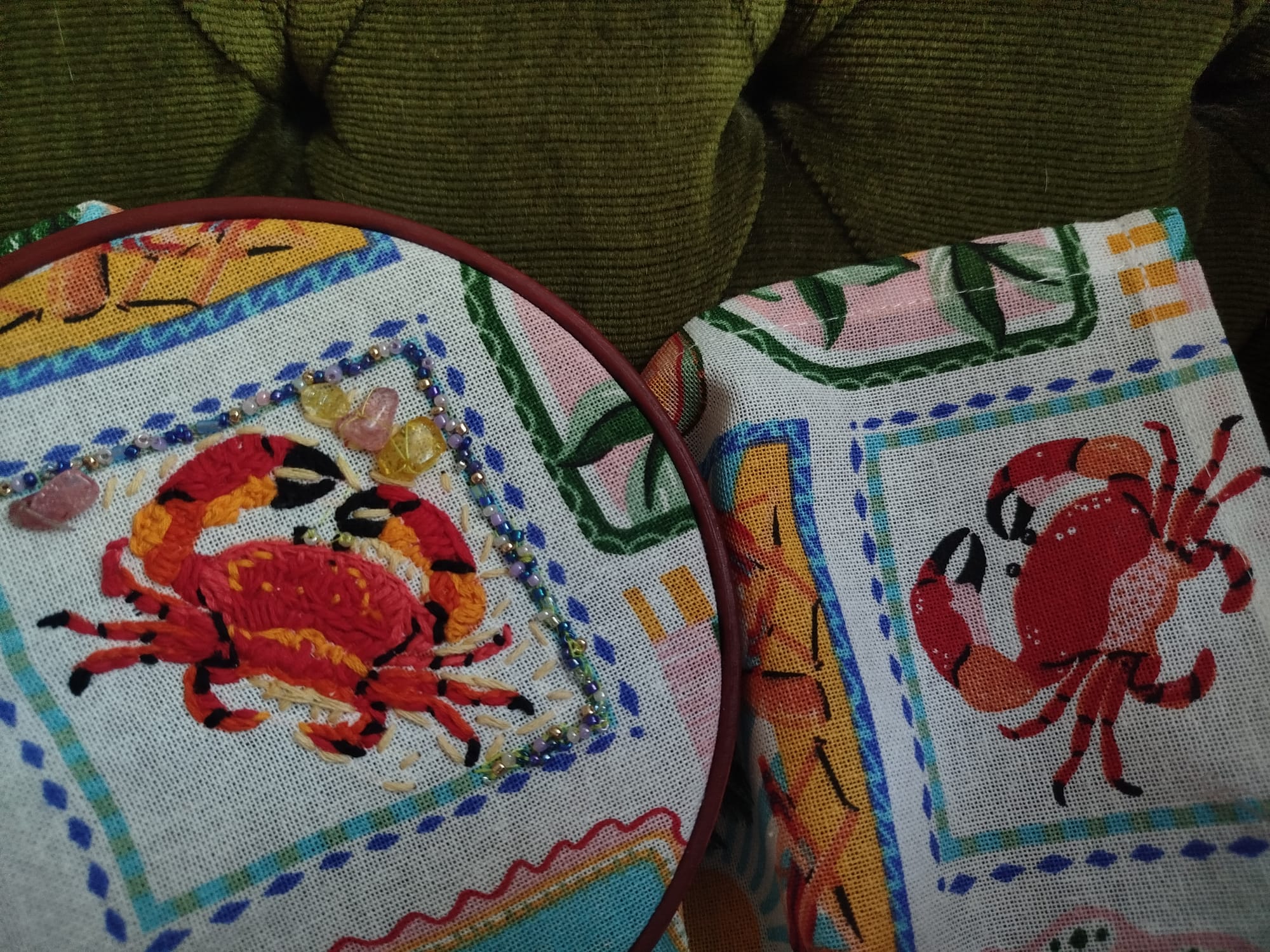
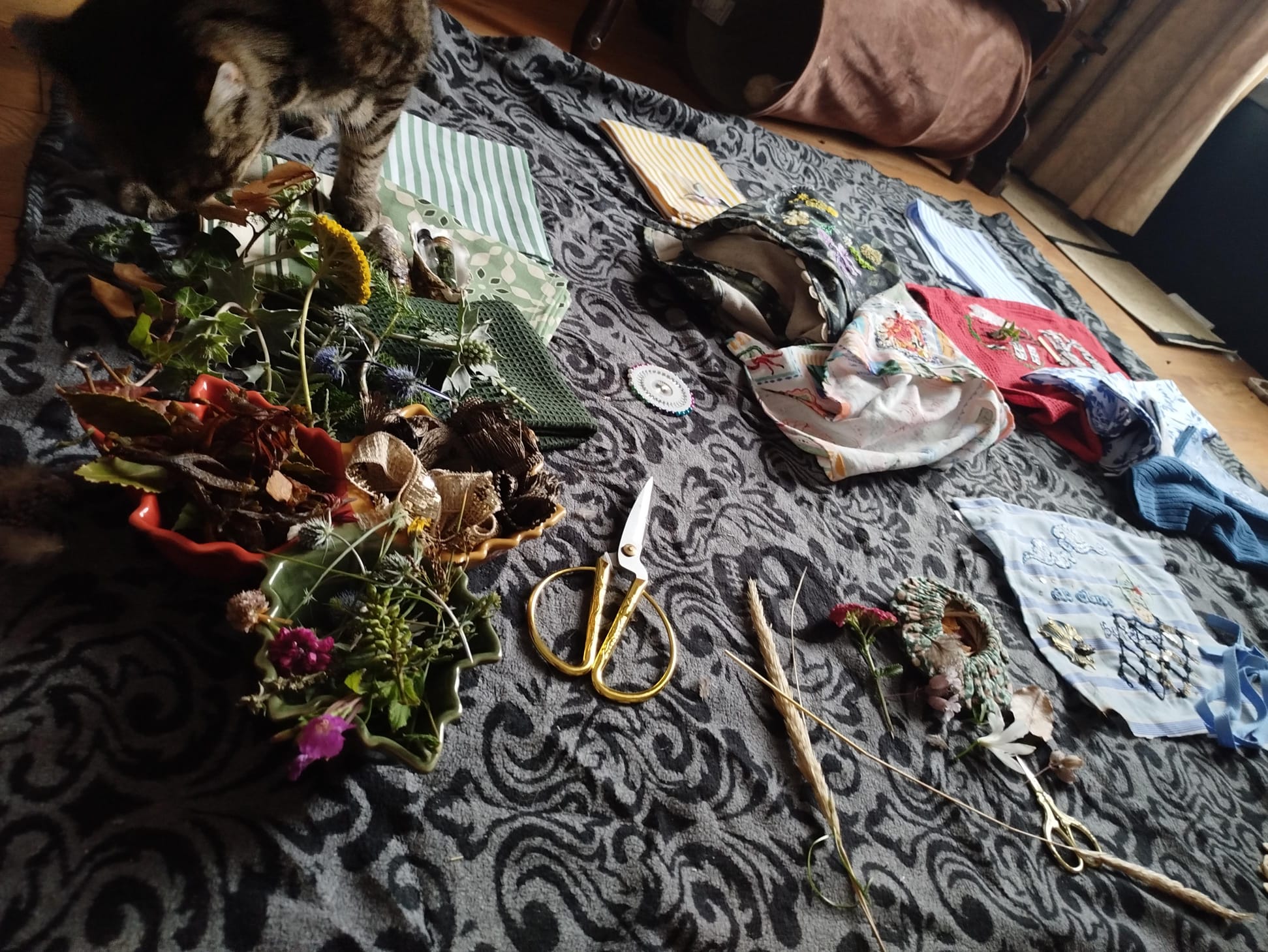
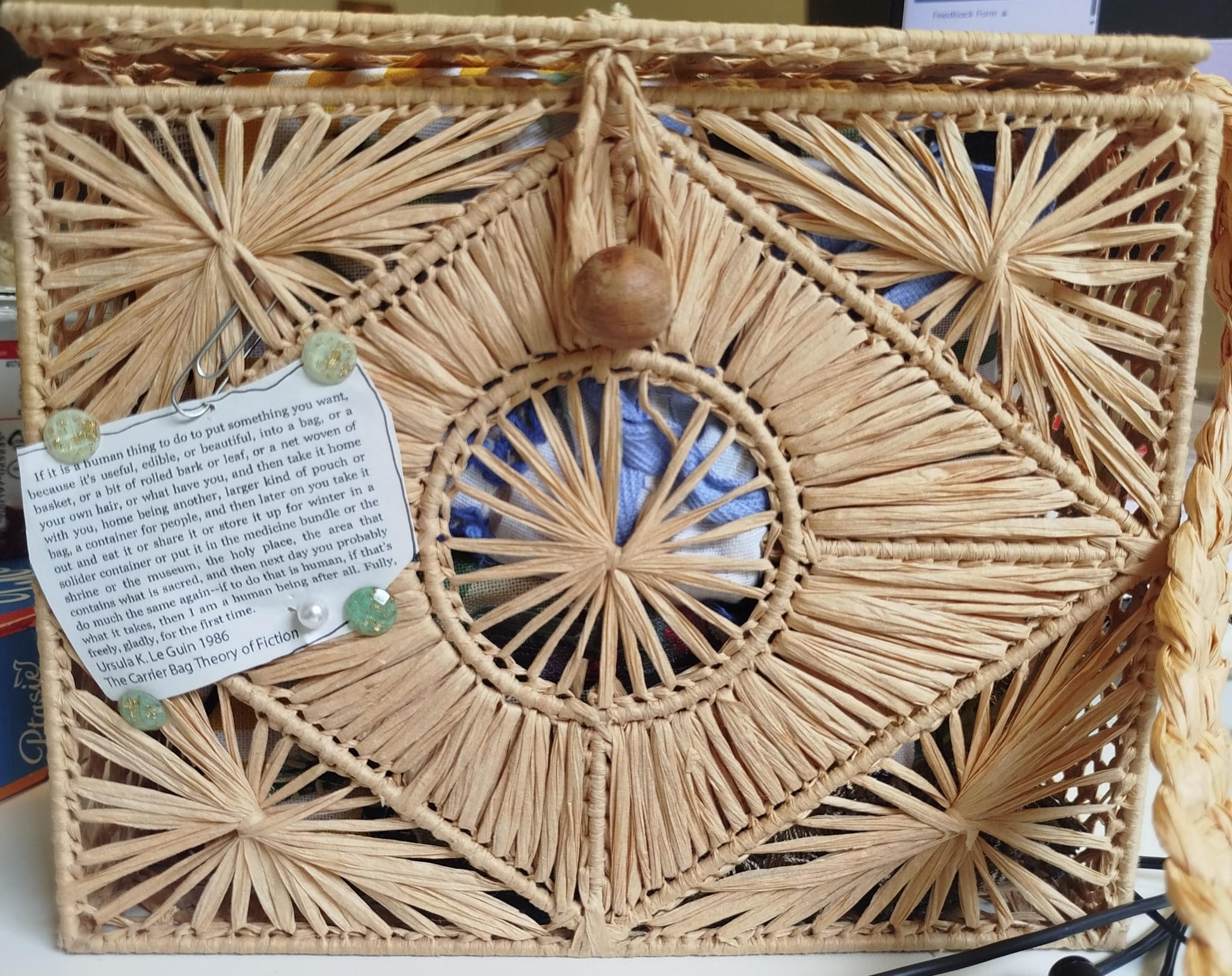
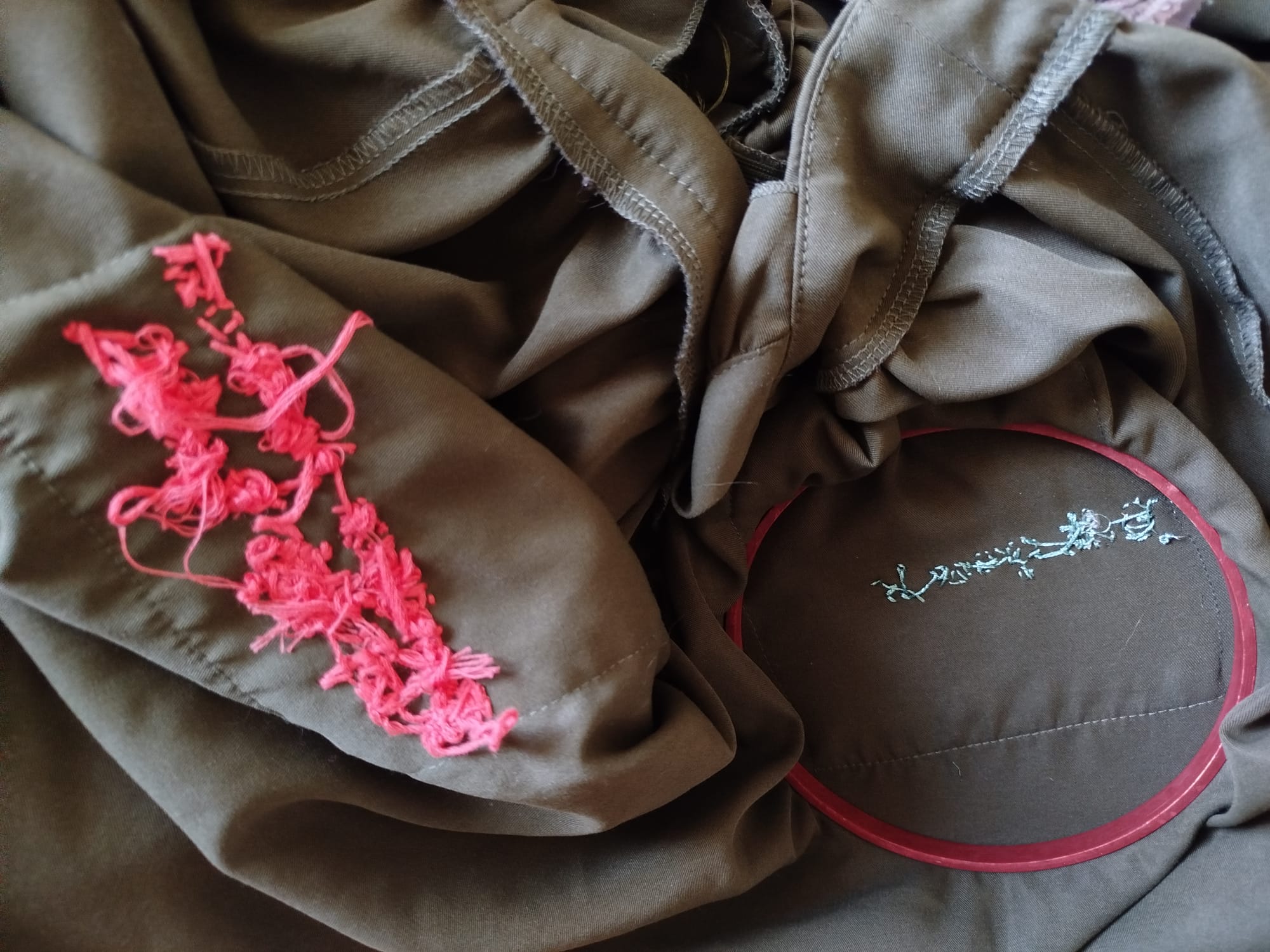
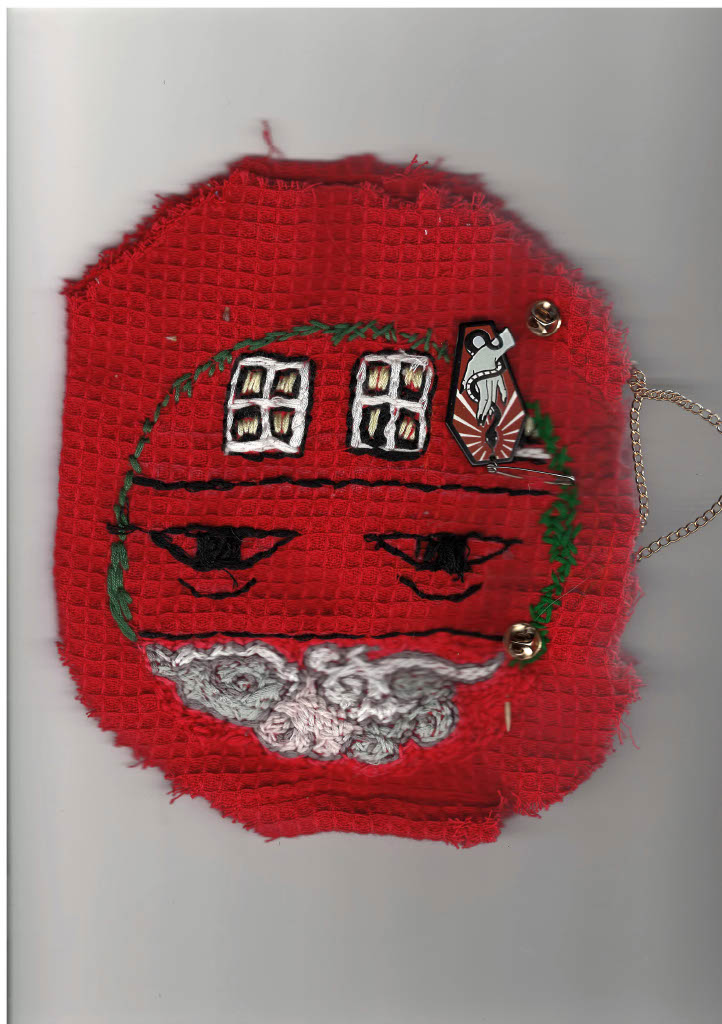
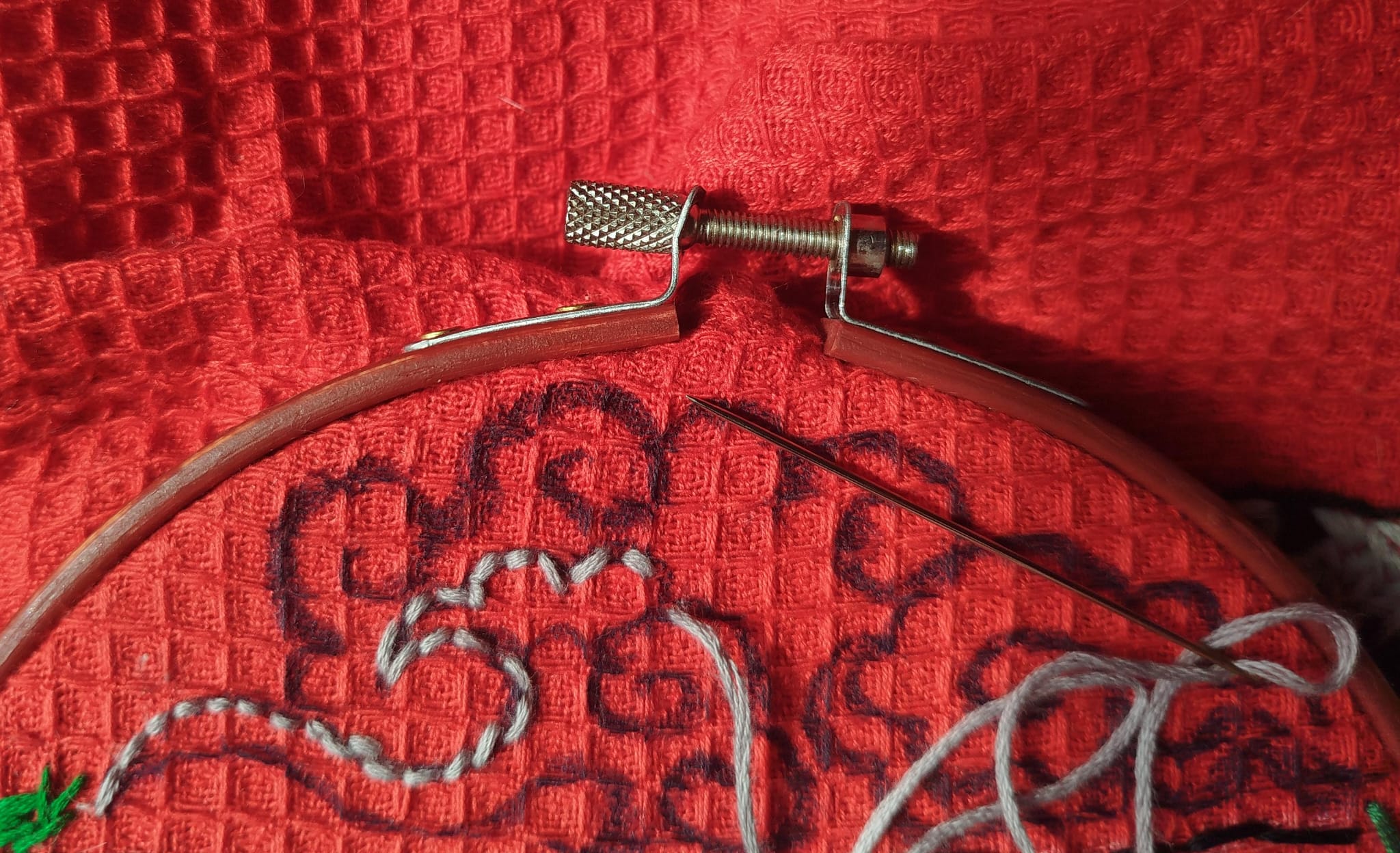
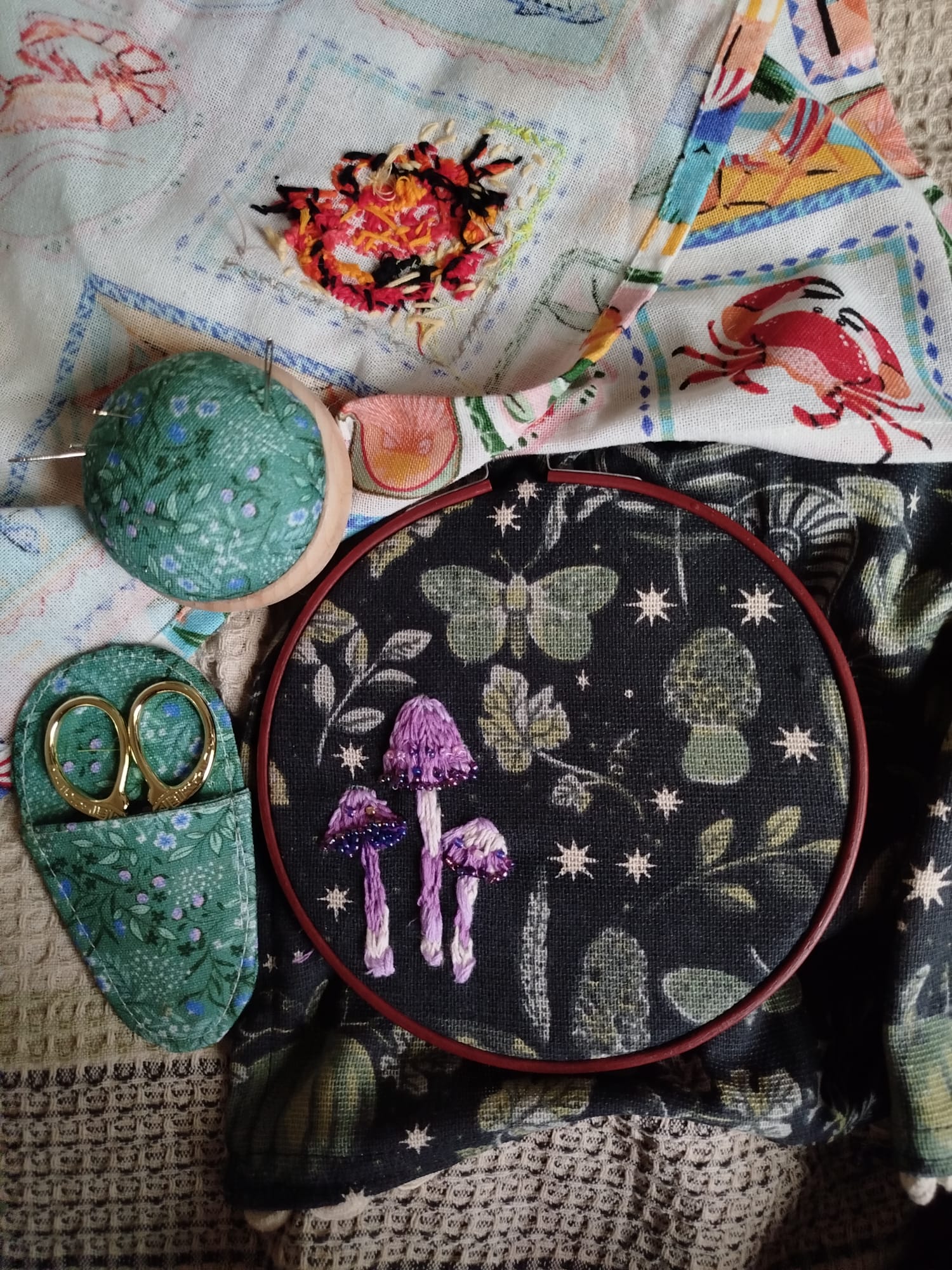
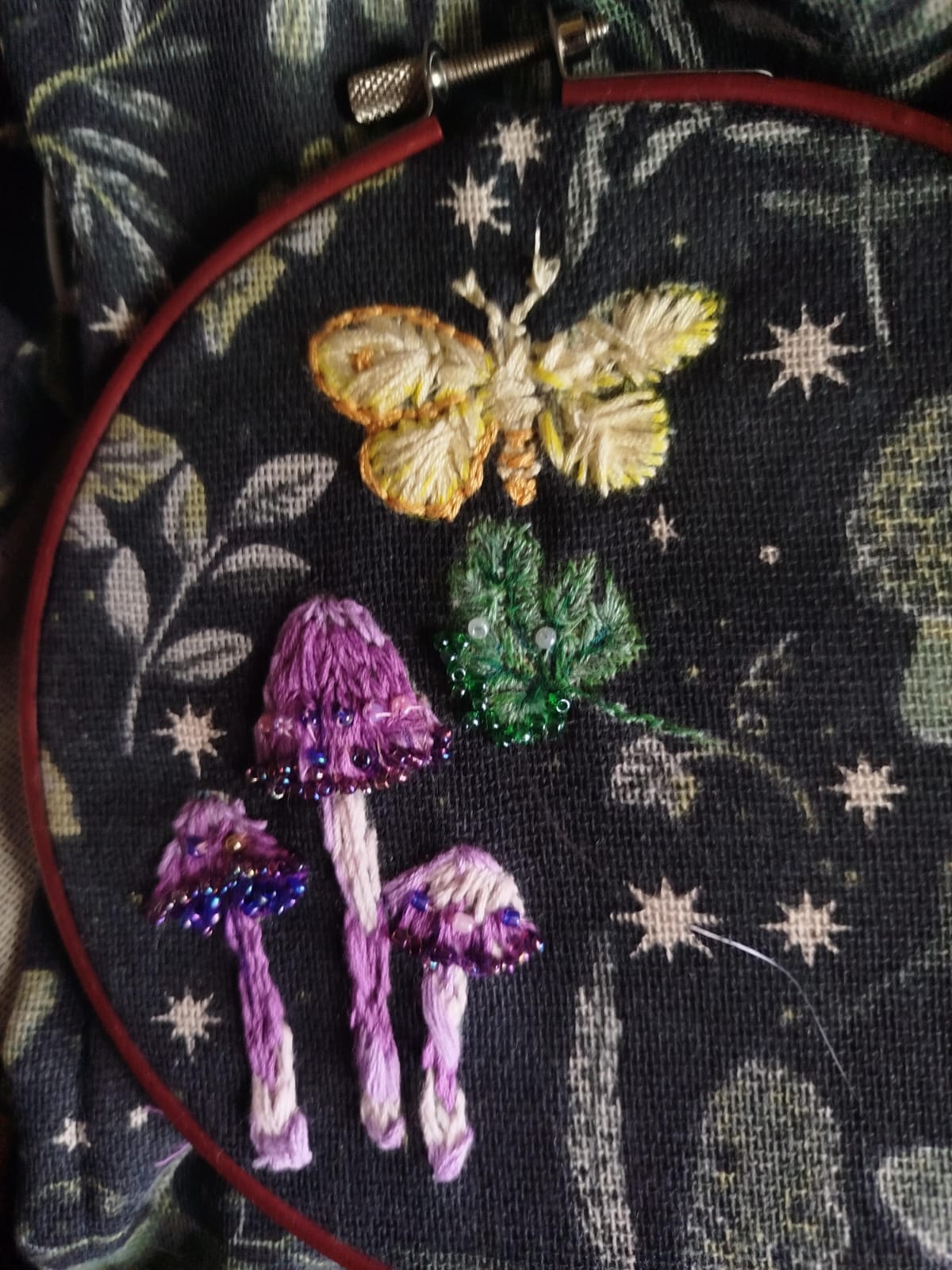
The rest is lost to us in visual format. But it still exists in the world, somewhere, in some other form.
Works Referenced
Abushammala, Hatem, Muhammad Adil Masood, Salma Taqi Ghulam, and Jia Mao. ‘On the Conversion of Paper Waste and Rejects into High-Value Materials and Energy’. Sustainability 15, no. 8 (2023): 6915.
Blume, Hans‐Peter, and Peter Leinweber. ‘Plaggen Soils: Landscape History, Properties, and Classification’. Journal of Plant Nutrition and Soil Science 167, no. 3 (2004): 319–27.
Dias, A. (2023) Decomposition Instead of Collapse – Dear Theatre, Be Like Soil, Rescripted. Available at: https://rescripted.org/2023/08/04/decomposition-instead-of-collapse-dear-theatre-be-like-soil/ (Accessed: 5 June 2025).
French, K.B., Sanchez, A. and Ullom, E. (2020) ‘Composting Settler Colonial Distortions: Cultivating Critical Land-Based Family History’, Genealogy, 4(3), p. 84. Available at: https://doi.org/10.3390/genealogy4030084.
Furszyfer Del Rio, Dylan D., Benjamin K. Sovacool, Steve Griffiths, et al. ‘Decarbonizing the Pulp and Paper Industry: A Critical and Systematic Review of Sociotechnical Developments and Policy Options’. Renewable and Sustainable Energy Reviews 167 (October 2022).
Hamilton, J.M. and Neimanis, A. (2018) ‘Composting Feminisms and Environmental Humanities’, Environmental Humanities, 10(2), pp. 501–527.
Gordienko, O. A. ‘Impact of War on Soils (a Review)’. Eurasian Soil Science 58, no. 10 (2025): 127.
Pau, B., Morgan, H. and Fleming, C. (2024) ‘“Unnatural” Nature: The Queerness of Compost’. Filet, London, 19 July. Available at: https://www.outsavvy.com/event/20852/queer-compost.
Roura, E.T. (2022) ‘Towards an Epistemological Shift: An attempt at a Compost Manifesto’, Prospectives. Available at: https://journal.b-pro.org/article/towards-an-epistemological-shift-an-attempt-at-a-compost-manifesto-12/.
Wesselink, L. G., J. Notenboom, and A. Tiktak. The Consequences of the European Soil Framework Directive for Dutch Policy. MNP Report No. 500094003. Netherlands Environmental Assessment Agency (MNP), 2006. https://www.uu.nl/sites/default/files/rebo-ucwosl-2006-consequences-european-soil-framework-directive.pdf.
Yuan, X. et al. (2012) ‘Effect of pretreatment by a microbial consortium on methane production of waste paper and cardboard’, Bioresource Technology, 118, pp. 281–288.

Leave a Reply